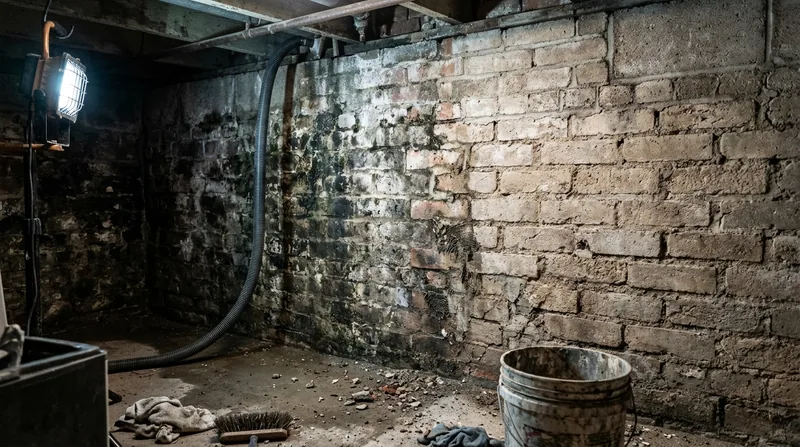




Basement Mold Remediation in Duluth: Stop the Moisture, Not Just the Mold
Basement Mold Remediation in Duluth starts with one hard truth: mold in a Duluth basement is a moisture problem wearing a disguise. The Central and East Hillside blocks climb steep grades on glacial clay soil, and that lake clay and silt drains slowly, so snowmelt and summer downpours push water against stone, brick, and early block foundations. We treat the affected surfaces, contain the work area, and then fix the water path that fed the growth. Musty smell diagnostics come first, because the nose usually finds the problem before the eyes do. If you want the full picture of how we keep water out, start with our basement waterproofing service.
Why Mold Takes Hold in Duluth Hillside Basements
Duluth is a hillside city, and the water table sits close to the lower streets of Lincoln Park and the East Hillside. Old stone and brick foundations weep at the mortar joints, early block walls crack through freeze-thaw cycles, and lake-effect snow piles against the foundation all winter. When that snow melts in March and April, it runs straight down the hill and finds every open joint. That is why hydrostatic pressure and slow-draining glacial clay soil drive most of the mold calls we get.
- Water seeps through block wall joints and shows up as efflorescence and white salt bloom on the basement wall.
- Failed drain tile and clogged footing drains leave the perimeter wet long after the rain stops.
- Downspouts that dump beside the foundation send roof water back into the wall.
- Musty basement smell in finished lower levels points to moisture trapped behind paneling or drywall.
We read those signs before we touch a surface, because remediation without a moisture fix is a repeat job waiting to happen.
Key info: A 1920s brick foundation on the East Hillside can show mold on the lower block while the real culprit is a cracked parging coat letting hillside runoff in. We find the entry point first, then remediate.
For official guidance on moisture and mold in homes, the U.S. EPA maintains a plain-language resource at epa.gov/mold.
How We Run Basement Mold Remediation in Duluth
We work in a fixed order: diagnose the moisture source, contain the affected area, treat the surfaces, then correct the water path. On a Woodland ranch with a partly finished basement, that often means pulling a wet baseboard, checking the block wall behind it, and testing the sump basin before we decide how far the remediation goes. We do not seal a wall and call it done while the water table keeps pushing.
- We walk the basement and the exterior grade, and we trace the musty smell to its source.
- We set up containment with plastic sheeting and negative air pressure so spores stay in the work zone.
- We remove porous materials that cannot be cleaned and treat framing and block with an antimicrobial application.
- We correct the moisture path with drain tile, crack injection, or a vapor barrier as the inspection dictates.
- We dry the space with dehumidification and verify moisture readings before we close up.
Every job ends with a moisture check, not just a visual walkthrough.
Key info: In a Morgan Park split-level, we found mold along the bottom plate fed by a failed sump pump check valve. The remediation was straightforward once the discharge line was corrected and the basin replaced. See our sump pump installation and replacement page for that side of the fix.
Remediation Approaches We Use Below Grade
Not every basement needs the same treatment. A single damp corner in a Duluth Heights block basement is a different job from a finished lower level with mold behind the drywall. We match the approach to the moisture reading and the wall type, and we tell you plainly when a simpler fix will hold.
| Approach | Description | Best for |
|---|---|---|
| Surface treatment and containment | Contain the area, remove porous material, treat block and framing with antimicrobial application. | Light growth on block walls and joists |
| Crack injection plus remediation | Seal the entry with epoxy or polyurethane injection, then treat the affected wall surface. | Seepage through a visible foundation crack |
| Drainage correction plus drying | Interior perimeter drain and dehumidification to keep the wall dry after treatment. | Hydrostatic pressure and recurring damp walls |
| Vapor barrier and wall sealing | Install a vapor barrier and seal the wall to cut moisture migration into the room. | Damp block walls in finished lower levels |
Each row is a different answer to the same question: where is the water coming from, and how do we keep it from coming back?
Basement Mold Remediation Cost in Duluth: What to Expect
Basement mold remediation in Duluth starts from $1,500, and that figure covers a contained work area, surface treatment, and the moisture diagnostics that tell us what caused the growth. The number moves with square footage affected, how much porous material has to come out, and whether the moisture fix is a simple crack injection or a full interior perimeter drain. A finished basement in Hermantown with mold behind paneling costs more to remediate than an unfinished block wall in Lincoln Park.
We give a written scope before work starts, and we separate remediation from the drainage or waterproofing correction so you can see what each part costs. Get two or three estimates and compare the scope line by line, not just the bottom number. A quote that treats the mold without naming the moisture source is incomplete. Our pricing overview breaks down the ranges in more detail.
Hiring a Basement Mold Remediation Contractor Near Me in Duluth
Ask three things before you sign: are they licensed and insured, will they put the moisture diagnosis in writing, and can they show recent work on Duluth hillside foundations. Old stone and block walls behave differently from poured concrete, and a contractor who only handles new construction may miss the mortar joint seepage that is common on the East Hillside. Get references from jobs in your neighborhood and call them.
Permits are commonly required for structural foundation repair and for work that alters drainage or the sanitary connection of a sump discharge, and thresholds vary by jurisdiction. Verify the rules with the City of Duluth building department before work begins. If your property sits in an HOA, check the association requirements for exterior drainage changes as well. Reach out through our contact page to schedule a walkthrough and a free estimate.
Basement Mold Remediation in Duluth: Pricing Guide
| Service | Price | Details |
|---|---|---|
| Containment and surface treatment | Starting at $1,500 | Covers contained work area, antimicrobial treatment, and musty smell diagnostics for one basement zone |
| Remediation plus crack injection | Starting at $2,200 | Adds epoxy or polyurethane injection at the entry point, priced by crack length and wall access |
| Remediation plus drainage correction | On estimate | Interior perimeter drain or vapor barrier scope depends on wall type and moisture readings |
| Finished basement removal and rebuild | On estimate | Porous material removal and rebuild priced after on-site inspection of framing and insulation |
| Travel | Included | in Duluth and surrounding areas, no separate call-out or mileage fee |
| Estimate | Free | Response within 24h at (218) 520-4386, no obligation to book |
Indicative pricing, the exact cost depends on square footage, finish, and site access. Free personalized estimate within 24h at (218) 520-4386.


