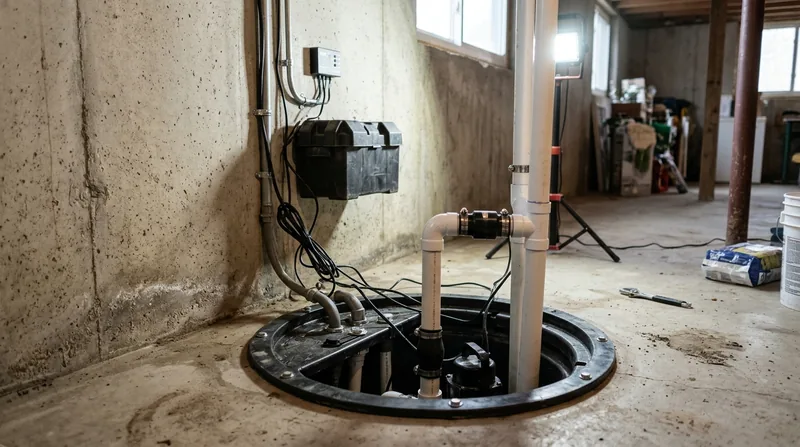




If your sump pump quits during a spring downpour on the Central Hillside or a January power outage in Woodland, the water in your basement starts rising within minutes. Battery Backup Sump Pumps in Duluth keep the pit dry when the grid goes down, which is exactly when a primary pump stops doing its job. This city sits on steep glacial clay and silt left by Glacial Lake Duluth, so snowmelt and heavy summer rain sheet down the hillside streets and load the drain tile fast. Old stone and block foundations on the lower streets of Lincoln Park and East Hillside already fight hydrostatic pressure every thaw. A backup pump buys you time when the power fails and the water table is still climbing. We size the battery, charger, and float switch to your existing sump basin and discharge line, then test the whole setup before we leave. Start with a free basement inspection and we will tell you straight whether your pit is ready for a backup.
Why Duluth Basements Need a Backup Pump, Not Just a Primary
Duluth's freeze-thaw cycles and lake-effect snow load the ground hard. When the thaw comes, meltwater runs down the hills and into footing drains that were sized for a much smaller storm. Many 1890s to 1930s houses on the lower streets have stone or early block walls with full basements, and the sump pump is the only thing standing between that water and the floor.
- Spring snowmelt sends a surge of water into the sump basin just as ice and wind knock out power across the hillside.
- Summer downpours on the steep Central and East Hillside streets overwhelm drain tile and cycle the primary pump constantly.
- Older sump pits in Lincoln Park and Morgan Park often lack a check valve or a properly sized discharge line, so the pump works harder than it should.
- Extended power outages during winter storms leave a wet basement with no pump running at all.
A backup system does not replace the primary pump. It covers the gap when the primary fails or the power drops, and that gap is where most flooded basements in this city begin.
Key info: On a March thaw in Hermantown, a primary pump can cycle every 30 to 60 seconds for hours as snowmelt drains off the slopes. That duty cycle wears out switches and motors, and a battery backup is what keeps the pit dry when the primary finally quits.
For official guidance on electrical and plumbing work in Minnesota, check the Minnesota Department of Labor and Industry before you schedule any sump discharge changes.
How We Install a Battery Backup Sump Pump on a Duluth Hillside
We start by looking at the pit, not the catalog. A sump basin in a 1920s East Hillside basement is often shallower and narrower than a modern pit in a Duluth Heights walkout, and the backup float has to fit without tangling the primary float. We check the discharge line, the check valve, and where the water actually leaves the house before we recommend a battery size.
- We inspect the existing sump basin, primary pump, check valve, and discharge line for capacity and condition.
- We measure the pit and match a backup pump and float switch that will not interfere with the primary float.
- We mount the battery and charger on a shelf or bracket clear of rising water and test the charger output.
- We wire the backup to the discharge line with its own check valve so the two pumps do not fight each other.
- We fill the pit and run a live test, then set the alarm and walk you through what each alert means.
If the pit itself is undersized or the discharge line is clogged, we say so before installing anything. A backup pump on a bad pit is money wasted.
Key info: A Proctor homeowner called after a July storm tripped the breaker and the primary pump stopped with the basin half full. We installed a backup with a separate discharge and a high-water alarm, and the next storm cycled it twice without a drop on the floor.
If your pit or primary pump is past its service life, pair the backup with a full sump pump installation or replacement so the whole system is matched.
Backup Pump Options We Install in Duluth
Not every basement needs the same setup. A finished basement in Woodland with a deep pit and a long discharge run calls for a different battery and charger than an unfinished basement in Scanlon with a shallow pit and a short run to daylight. Here is how the common approaches compare.
| Approach | Description | Best for |
|---|---|---|
| Standard battery backup | 12V backup pump with a deep-cycle battery and automatic charger, tied into the existing discharge line. | Most Duluth homes with a working primary pump and a standard pit. |
| High-capacity battery backup | Larger battery and higher-output pump for longer run times during extended outages. | Hillside homes where spring melt keeps the pit full for hours. |
| Backup with high-water alarm | Backup pump plus a float alarm that sounds before water reaches the floor. | Finished basements and homes where nobody is home during the day. |
| Combination primary and backup | New primary pump and backup installed together with matched check valves and discharge. | Pits with an aging primary pump or a history of failures. |
| Maintenance and battery replacement | Annual load test, charger check, float cleaning, and battery replacement when capacity drops. | Any installed backup that has not been tested in the last year. |
We match the approach to the pit and the discharge, not to a sales target. If a standard backup covers your basement, that is what we install.
Battery Backup Sump Pumps Cost in Duluth: What to Expect
Most battery backup installations in Duluth start at $900. That figure covers a standard 12V backup pump, a deep-cycle battery, a charger, a check valve, and the labor to tie it into your existing discharge line. The price moves up when the pit needs modification, when the discharge run is long or must be rerouted, or when you choose a high-capacity battery for longer run times.
A combination job that replaces the primary pump at the same time costs more, but it saves a second visit and leaves you with matched equipment. Homes in the hillside neighborhoods with shallow or narrow pits sometimes need a pit liner or a new basin before a backup can go in, and that is quoted separately after we see it.
Get two or three estimates and ask what battery and charger each one includes. A low quote that uses a small battery will not carry you through a long spring outage. Our full pricing overview shows how the numbers break down.
Battery Backup Sump Pumps Near Me: How to Pick a Contractor Near Duluth
You want a contractor who works on below-grade systems every week, not a general handyman who installs a battery and leaves. Ask for proof of licensing and insurance, and ask what happens if the backup fails during the first storm. A written scope and a live test before payment are the two things that separate a real installation from a box dropped in the pit.
- Confirm the company is licensed and insured and ask for a certificate before work starts.
- Get at least two written estimates that name the battery model, charger, and pump output.
- Ask for references from homeowners with the same foundation type and pit depth as yours.
- Ask whether the work needs a permit for the sump discharge connection, and confirm the local building department rules for your address.
- Check for any homeowner association rules on exterior discharge routing before the crew arrives.
We test every backup with water before we call the job done, and we show you the alarm and charger so you know what normal looks like. Reach out through our contact page to schedule a free estimate.
Battery Backup Sump Pumps in Duluth: Pricing Guide
| Service | Price | Details |
|---|---|---|
| Standard battery backup installation | Starting at $900 | Includes 12V backup pump, deep-cycle battery, charger, check valve, and tie-in to existing discharge line. |
| High-capacity battery backup | Starting at $1,250 | Larger battery and higher-output pump for longer run times during extended power outages. |
| Backup with high-water alarm | Starting at $1,050 | Adds a float alarm that sounds before water reaches the basement floor. |
| Combination primary and backup | On estimate | Priced after we inspect the pit, primary pump condition, and discharge line routing. |
| Maintenance and battery replacement | Starting at $150 | Annual load test, charger check, float cleaning, and battery replacement when capacity drops. |
| Estimate | Free | Response within 24h at (218) 520-4386, no obligation to book. |
Indicative pricing, the exact cost depends on square footage, finish, and site access. Free personalized estimate within 24h at (218) 520-4386.


