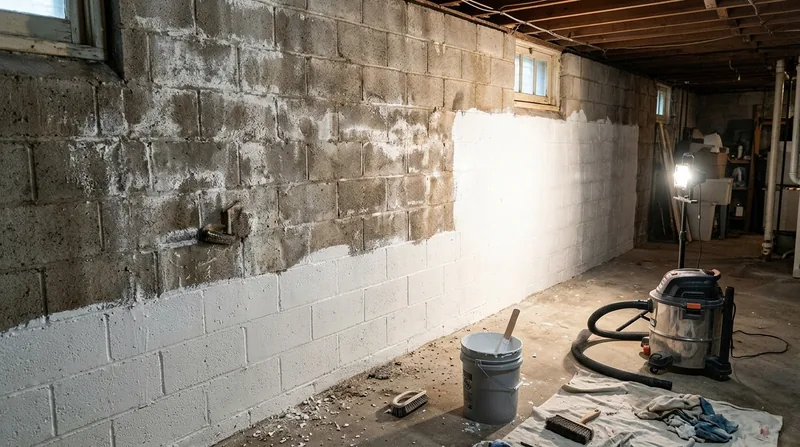




Basement Wall Sealing in Duluth starts with one honest question: is your wall damp, or is it under pressure? The answer decides everything. Duluth is a hillside city, and the houses on the Central and East Hillside, in Lincoln Park, and along the lower streets climb steep ground over glacial clay and silt left by Glacial Lake Duluth. That clay drains slowly, so snowmelt and heavy summer rain run down the hill and push against stone, brick, and early block foundations. We seal basement walls for homeowners across Duluth, and we tell you plainly when a sealer will solve the problem and when hydrostatic pressure means you need basement waterproofing instead.
Why Basement Wall Sealing Matters on Duluth's Hillside Foundations
Most of the older housing stock here sits on foundations built between the 1890s and the 1930s, and many of those walls are porous stone or soft brick that wick groundwater. Add the freeze-thaw cycle that opens hairline cracks in block every winter, and you get damp walls, white powder on the masonry, and a musty smell by spring. Sealing is the right first step when the wall is damp but sound.
- Efflorescence on the wall face tells you water is moving through the masonry and leaving mineral salts behind.
- Damp patches that spread after a rain point to wall seepage rather than a plumbing leak.
- Parging that has crumbled off an old stone wall leaves the masonry exposed to freeze-thaw damage.
- Cold wall surfaces in a Duluth winter condense moisture and mimic a leak that is not there.
We test the wall before we sell a sealer, because sealing a wall that is under hydrostatic pressure traps water inside the masonry and makes the problem worse.
Key info: A 1920s brick foundation on a lower East Hillside street can show efflorescence after every March thaw and still be a sealing job, not an excavation job. A block wall in Morgan Park with water standing at the cove joint after a July downpour is a drainage job. Same city, two different answers.
Minnesota homeowners can check contractor licensing and business records through the Minnesota Department of Labor and Industry before hiring anyone for work on a foundation.
How We Seal a Basement Wall in Duluth, Step by Step
Sealing is a surface and masonry job, not a paint job. We start by finding where the water actually enters, then we prepare the wall so the product bonds to sound masonry instead of dust and salt. On the old stone and brick walls common in Lincoln Park and the East Hillside, preparation takes longer than the coating itself, and that is where most failed DIY sealing jobs go wrong.
- We inspect the wall, the cove joint, and the floor perimeter and note any active seepage or cracking.
- We wire-brush and scrape loose parging, old paint, and crumbling mortar off the wall face.
- We remove efflorescence with a masonry cleaner and let the wall dry to a sound surface.
- We fill open cracks and voids with hydraulic cement or an epoxy injection where the crack is structural.
- We apply a penetrating sealer on damp-prone masonry or a membrane coating where the wall needs a physical barrier.
- We check grading and downspout extensions at the same visit, since water dumped at the foundation undoes any sealer.
If the inspection shows water coming up at the floor joint instead of through the wall, we say so and point you to interior drain tile, which handles hydrostatic pressure that no sealer can stop.
Key info: On a 1950s split-level in Duluth Heights, we sealed a block wall that had been painted over twice. The paint had trapped moisture and the block was spalling. Stripping, cleaning, and a breathable penetrating sealer fixed the dampness that two coats of basement paint had made worse.
Sealing Approaches We Use and When Each One Fits
Not every wall takes the same product. Poured walls, block walls, and old stone behave differently, and a wall that is damp from capillary action needs a different treatment than one with a hairline crack that leaks during rain. Here is how we match the approach to the wall.
| Approach | Description | Best for |
|---|---|---|
| Penetrating sealer | Soaks into masonry and blocks capillary movement without trapping vapor. | Damp stone and brick walls with no active cracking. |
| Membrane coating | Forms a flexible physical barrier over a prepared wall face. | Block walls with fine surface seepage and sound parging. |
| Epoxy injection | Fills and bonds a poured-wall crack from port to port. | Non-moving structural cracks in poured concrete. |
| Polyurethane injection | Expands to seal cracks that move or seep actively. | Active leaks and cracks that open and close with the seasons. |
| Parging repair | Rebuilds the mortar face before any sealer goes on. | Old stone walls with crumbling surface mortar. |
We pick the method after we see the wall, not before, and we tell you when a crack needs foundation crack repair rather than a coating.
Basement Wall Sealing Cost in Duluth: What to Expect
Most sealing work in Duluth starts at $1,500, and that figure covers a typical single-wall or small basement job with cleaning, efflorescence removal, and a sealer applied to sound masonry. The number moves up with wall length, how much prep the masonry needs, and whether cracks require injection before sealing. A crumbling stone wall that has to be re-parged costs more than a clean block wall of the same size.
- Wall length and height drive the square footage of prep and product.
- Efflorescence and failed paint add cleaning and stripping time.
- Crack injection is priced separately from the sealer itself.
- Access around furnaces, water heaters, and shelving slows the work.
Get two or three estimates and ask each contractor what they found on the wall and why they chose their method. You can review the full breakdown on our pricing page before anyone visits.
Hiring a Basement Wall Sealing Contractor Near Me in Duluth
Sealing is easy to sell and easy to do wrong, so check the basics before you sign. Ask whether the contractor is licensed and insured, request a certificate of insurance, and call a couple of recent references in Duluth or Hermantown. A sealer applied over a wet wall or a dirty wall fails within a season, and a contractor who skips prep is telling you what the job will look like.
- Confirm the company carries liability and workers' compensation coverage for below-grade work.
- Ask how they handle permits if the job touches structural foundation repair or drainage connections.
- Get the scope in writing, including prep steps and which sealer product goes on the wall.
- Check whether the warranty is transferable if you sell the house.
Permit thresholds vary by jurisdiction, so confirm requirements with the City of Duluth building department before work begins. When you are ready to talk it through, contact us and we will schedule a free basement inspection.
Basement Wall Sealing in Duluth: Pricing Guide
| Service | Price | Details |
|---|---|---|
| Single wall sealing | Starting at $1,500 | Includes cleaning, efflorescence removal, and sealer on one sound basement wall. |
| Full basement wall sealing | Starting at $2,800 | Covers all accessible walls, with prep time rising on rough stone or painted block. |
| Sealing with crack injection | On estimate | Priced after inspection because crack count and movement determine the injection method. |
| Travel | Included | In Duluth and surrounding areas, no separate call-out or mileage fee. |
| Estimate | Free | Response within 24h at (218) 520-4386, no obligation to book. |
Indicative pricing, the exact cost depends on square footage, finish, and site access. Free personalized estimate within 24h at (218) 520-4386.


