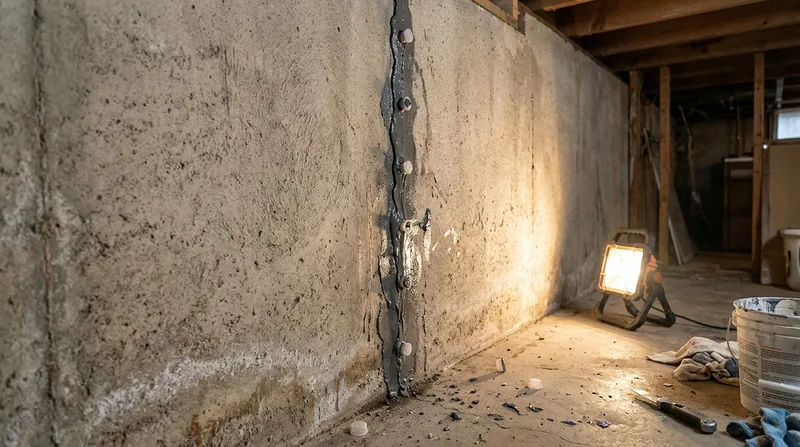




Duluth sits on a steep hillside above Lake Superior, and the ground under most of the city is glacial clay and silt left by Glacial Lake Duluth. That clay drains slowly, so snowmelt and heavy summer downpours run down the Central and East Hillside streets and push hard against old stone, brick, and block foundations. If you have a crack leaking after rain, Foundation Crack Repair in Duluth starts with figuring out what the crack is telling you, not just smearing sealer over it. We inspect the wall, check for efflorescence and movement, and match the repair to the actual failure. For the bigger picture on keeping water out, see our basement waterproofing service.
Why Foundation Cracks Show Up So Often in Duluth's Hillside Neighborhoods
Most of the housing stock here is working against the soil. The 1890s to 1930s houses climbing the Central and East Hillside and filling Lincoln Park have stone and early block foundations with full basements on the lower streets, and those walls were never built for today's freeze-thaw cycles. The 1940s to 1960s ranches and split-levels in Woodland, Morgan Park, and Duluth Heights have block walls that crack at the mortar joints when wet clay pushes in. Newer walkouts and poured basements on the slopes above the lake crack along shrinkage lines and cold joints.
- Glacial clay soil holds water against the wall and creates hydrostatic pressure that opens joints.
- Freeze-thaw cycles widen hairline cracks a little more every winter.
- Lake-effect snow piles against the foundation and feeds meltwater straight into the wall.
- Downspouts that dump near the footing soak the soil and keep the crack wet.
- Old stone and brick foundations move differently than poured concrete, so the repair method has to match the material.
We see the same pattern in Proctor and Hermantown, where block walls and partly finished basements take on water after a hard rain.
Key info: A crack in a Lincoln Park stone foundation and a shrinkage crack in a 1990s poured wall in Duluth Heights are two different repairs. One may need polyurethane injection and drainage work, the other may only need epoxy injection.
Minnesota rules on foundation and drainage work vary by jurisdiction, so confirm permit requirements with the City of Duluth building department before any structural repair begins.
How We Repair Foundation Cracks on Duluth's Hillside Walls
We do not sell one patch for every crack. The first step is reading the wall: is this a non-structural crack that lets water in, or is the wall moving because wet clay and frost are pushing it? That answer decides whether we inject, strap, or recommend drainage. We start every job with a free basement inspection so the repair is based on what the wall is actually doing.
- We inspect the crack, the wall, and the grading, and check for efflorescence, bowing, and water staining.
- We clean the crack and set injection ports at the right spacing for the wall material.
- We finish the surface and check that the repair holds under pressure.
- If the crack is a symptom of hydrostatic pressure, we explain the drainage options instead of pretending injection alone will solve it.
When the wall is bowing or the crack keeps opening, we move to structural options and talk plainly about what is happening.
Key info: On a 1920s block wall in East Hillside, a stair-step crack along the mortar often means the footing is moving. We inject the crack, then check whether an interior drain tile system is the real fix for the water pushing on that wall.
If the crack is part of a wet basement pattern, our interior drain tile system page explains how we relieve the pressure from inside.
Repair Methods We Match to the Crack
| Approach | Description | Best for |
|---|---|---|
| Epoxy injection | Structural epoxy bonds the crack faces back together and restores wall strength. | Non-structural cracks in poured concrete that are not actively leaking. |
| Polyurethane injection | Flexible foam expands into the crack and seals active water leaks. | Wet, leaking cracks and hairline cracks that move with freeze-thaw. |
| Carbon fiber straps | Straps add lateral strength to a wall that is bowing inward. | Block walls in Woodland and Morgan Park showing bowing or horizontal cracks. |
| Wall anchors | Anchors pull a moving wall back toward plumb from the outside. | Walls pushed in by hydrostatic pressure from wet clay soil. |
| Drainage correction | Interior drain tile and a sump basin relieve the water pressure driving the crack. | Cracks that come back because water is still pushing on the wall. |
Foundation Crack Repair Cost in Duluth: What to Expect
Most homeowners want a number before they book anything, and that is fair. A single non-structural crack repair typically starts around $450, and the final figure depends on the wall material, the crack length, whether water is active, and how easy it is to reach the wall. A stone foundation in Lincoln Park takes more prep than a clean poured wall in Hermantown. When the crack is a symptom of hydrostatic pressure, the estimate may include drainage work, and we tell you that up front rather than after the injection.
- Crack length and width change the amount of injection material and port spacing.
- Active leaks and wet walls need polyurethane and more prep time than a dry crack.
- Old stone and block walls take more labor to clean and seal than poured concrete.
- Access matters, especially in tight basements and finished rooms.
- Structural movement adds strapping or anchoring to the scope.
Getting two or three estimates is smart, and we are happy to explain what each one includes. Our full pricing overview breaks down the ranges so you can compare apples to apples.
Foundation Crack Repair Near Me: How to Choose a Contractor Near Duluth
You want someone who works below grade every week, not a general handyman with a tube of sealer. Ask for proof of licensing and insurance, and get the certificate, not just a verbal yes. Get more than one estimate and make sure each one explains the method, not just the price. Check references from jobs in Duluth, Proctor, or Cloquet, and ask whether the contractor pulled the right permits for structural work. If you live in an association, confirm any HOA requirements before work starts.
A good contractor will tell you when simple crack sealing is enough and when the real problem is water pressure. Call us at (218) 520-4386 or use our contact page to set up a free inspection.
Foundation Crack Repair in Duluth: Pricing Guide
| Service | Price | Details |
|---|---|---|
| Single crack injection (non-structural) | Starting at $450 | Includes cleaning, port setting, epoxy or polyurethane injection, and surface finish for one typical crack. |
| Multiple crack repair in one basement | Starting at $750 | Covers several cracks in the same wall, with price moving on total length and wall access. |
| Active leak with polyurethane injection | Starting at $550 | Includes flexible foam injection for a wet, leaking crack and a pressure check after the repair. |
| Structural repair (straps or anchors) | On estimate | Bowing or shifting walls need an on-site look to size carbon fiber straps or wall anchors. |
| Travel | Included | In Duluth and surrounding areas, no separate call-out or mileage fee. |
| Estimate | Free | Response within 24 hours at (218) 520-4386, no obligation to book. |
Indicative pricing, the exact cost depends on square footage, finish, and site access. Free personalized estimate within 24h at (218) 520-4386.


