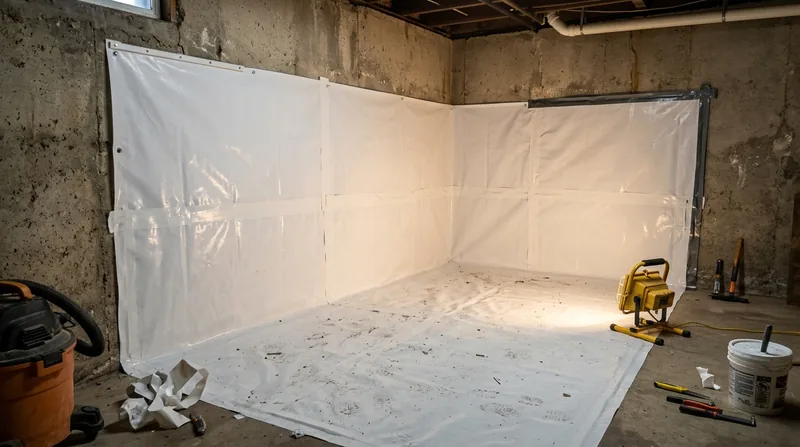




Duluth sits on a hillside of glacial lake clay and silt over bedrock, and that ground holds water instead of draining it. In the Central and East Hillside, 1890s to 1930s houses climb the slope with stone, brick, and early block foundations, while the lower streets of Lincoln Park keep full basements sitting right at the water table. Vapor Barrier Installation in Duluth targets the moisture that never shows up as a puddle: the ground vapor that pushes through old block and slab, feeds efflorescence, and keeps the lower level smelling damp all summer. We install heavy-duty barrier sheets across basement walls and slabs, seal the seams, tape the terminations, and tie the system into the sump where the floor calls for it. If your basement feels wet but no crack is leaking, this is the layer that addresses it. For the full picture of how vapor control fits with drainage, see our basement waterproofing service.
Why Vapor Barriers Matter in Duluth's Glacial Clay Basements
The ground here is Glacial Lake Duluth clay and silt, and it drains slowly. That means moisture sits against the foundation for weeks after snowmelt and stays in the soil through the humid stretches of July and August. Old block and stone walls wick that moisture inward, and a bare slab passes ground vapor straight into the basement. A vapor barrier stops that vapor at the surface before it reaches framing, stored goods, and finished materials.
- Bare basement slabs pass ground moisture vapor into the room year round, even when no water is visible on the floor.
- Block and stone walls absorb water from the clay and release it inward, which drives efflorescence and a persistent musty smell.
- Freeze-thaw cycles on the hillside open joints in old foundations, giving vapor and liquid water a path into the basement.
- Lake-effect snow piles against foundation walls and feeds slow meltwater into the soil through March and April.
A properly sealed vapor barrier addresses the vapor side of the problem, which is the half that crack sealing alone never fixes.
Key info: On a 1920s block foundation in Lincoln Park, we routinely find white efflorescence powdering the lower wall courses and a slab that stays cool and damp all summer. That pattern points to ground vapor, not a leaking crack, and a taped and sealed vapor barrier is the right first layer.
Minnesota building officials publish guidance on moisture control and foundation work through the Minnesota Department of Labor and Industry, and the City of Duluth building department confirms what a given job requires before we start.
How We Install a Vapor Barrier on a Duluth Hillside Foundation
We start by finding out where the moisture actually comes from. On the hillside streets above the lake, hydrostatic pressure and ground vapor often show up together, so we check the wall joints, the slab, the drain tile, and the sump before we spec a barrier. The install itself is methodical, and the details at seams and terminations are what make it work.
- We inspect the walls and slab for active leaks, efflorescence, and failed parging, and we note any crack that needs epoxy or polyurethane injection first.
- We clean and prep the wall and floor surfaces so the barrier and adhesives bond properly.
- We cut and fit heavy-duty barrier sheets to the wall height and floor layout, working around pipes, posts, and the sump basin.
- We seal every seam and tape all terminations, then tie the floor membrane into the sump basin where the system calls for it.
- We leave the discharge line and check valve accessible and confirm the sump pump is moving water before we close out.
If the inspection shows active seepage at a wall joint, we fix that first. A barrier over a leaking crack traps the problem instead of solving it, and our foundation crack repair crew handles the injection work before the barrier goes up.
Key info: A split-level in Woodland with a partly finished lower level had a damp slab and efflorescence on the block, no standing water. We sealed two hairline cracks, installed the vapor barrier across the walls and floor, and tied the membrane into the existing sump basin. The damp smell was gone within a week.
Vapor Barrier Approaches We Use in Duluth Homes
Not every basement needs the same barrier. Old stone foundations, poured walkouts on the slopes above the lake, and partly finished block basements in Duluth Heights each call for a different sheet, fastening method, and termination detail. The table below shows the main approaches and where each one fits.
| Approach | Description | Best for |
|---|---|---|
| Wall and slab vapor barrier | Heavy-duty sheets run up the wall and across the floor, with sealed seams and taped terminations. | Block and poured basements with damp slabs and efflorescence. |
| Dimple board drainage mat | Dimpled membrane holds the barrier off the wall and lets moisture drain down to the perimeter. | Stone and early block walls with uneven surfaces. |
| Sump-integrated floor membrane | Floor barrier ties into the sump basin so collected moisture discharges through the pump. | Basements with an existing interior drain tile system. |
| Targeted wall membrane | Barrier installed on the damp wall only, with sealed terminations at the floor line. | Partly finished basements where the slab stays dry. |
We match the approach to the foundation type and the moisture reading, not to a one-size template.
Vapor Barrier Installation Cost in Duluth: What to Expect
Most vapor barrier work in Duluth starts from $3 per square foot, and that figure covers the barrier material, surface prep, seam sealing, and taped terminations. The number moves with the size of the basement, the condition of the walls, and how much detail work the job needs around pipes, posts, and the sump. A clean poured wall in a newer Hermantown walkout prices differently from a stone foundation in the East Hillside that needs parging repair first.
Access matters too. A basement with a finished ceiling and tight mechanical space takes longer than an open one, and a floor that needs crack injection before the barrier goes down adds a line item. We give you a written scope so you can see what is included. For the full breakdown, see our pricing page, and get two or three estimates so you can compare scope, not just the bottom line.
What to Look For in a Vapor Barrier Contractor Near Duluth
Vapor barrier work looks simple until a seam fails or a termination pulls loose, and then the moisture comes right back. Hire a contractor who specializes in below-grade work, carries current Minnesota licensing and insurance, and can explain why a barrier is the right answer for your basement rather than the only product they sell. Ask for local references, especially on foundations like yours.
- Confirm the contractor is licensed and insured, and ask for a certificate of insurance before work starts.
- Get two or three written estimates that list materials, prep work, and what happens if a crack is found during install.
- Check references on similar foundations, whether stone, block, or poured, in Duluth and the surrounding towns.
- Ask who pulls any permit the City of Duluth requires for the work, and get that in writing.
If a contractor cannot answer those questions plainly, keep looking. You can reach us through our contact page to schedule a free basement inspection and a written estimate.
Vapor Barrier Installation in Duluth: Pricing Guide
| Service | Price | Details |
|---|---|---|
| Wall and slab vapor barrier | Starting at $3/sq ft | Includes heavy-duty sheets, surface prep, sealed seams, and taped terminations on walls and floor. |
| Dimple board drainage mat | Starting at $3.75/sq ft | Adds dimpled membrane over uneven stone or early block walls to direct moisture to the perimeter. |
| Sump-integrated floor membrane | Starting at $4.25/sq ft | Ties the floor barrier into the sump basin and keeps the discharge line and check valve accessible. |
| Targeted wall membrane | Starting at $2.50/sq ft | Barrier on the damp wall only, with sealed terminations at the floor line in partly finished basements. |
| Complex or large-scale job | On estimate | Stone foundations, crack injection first, or tight access need an on-site look before pricing. |
| Estimate | Free | Response within 24h at (218) 520-4386, no obligation to book. |
Indicative pricing, the exact cost depends on square footage, finish, and site access. Free personalized estimate within 24h at (218) 520-4386.


