Why Older Homes in Duluth Are Prone to Foundation Issues
Homes built before the 1970s in Duluth often sit on foundations that were built with materials and methods we would not use today. Many of these older foundations are made of poured concrete, concrete block, or even stone masonry, and they have spent decades absorbing the freeze-thaw cycles that define our climate. When water enters tiny pores in the concrete and then freezes, it expands with enough force to crack even solid walls. Over many winters, that cycle repeats and the damage compounds.
Duluth's hillside topography adds another layer of risk. Many older homes are built into slopes, which means the soil around the foundation is constantly pushing against the walls. When that soil becomes saturated after heavy rain or snowmelt, the pressure increases dramatically. This is why foundation problems signs often show up first on the downhill side of a home. If you live in an older house in Hermantown or Proctor, the same forces are likely at work on your property. Understanding these local conditions is the first step in protecting your investment.
Basement Wall Cracks: What They Mean and When to Worry
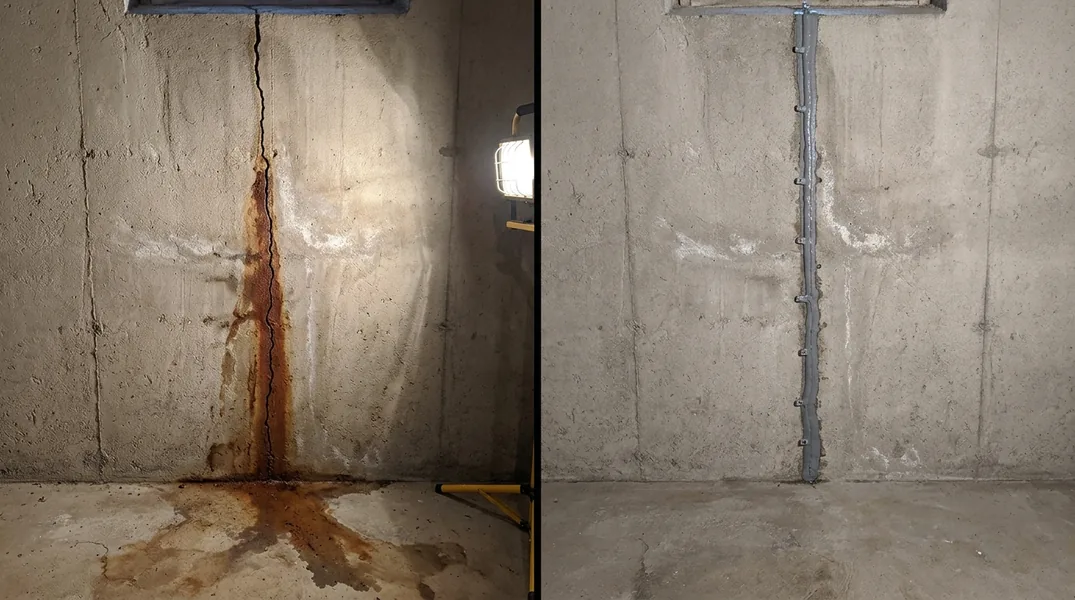
Not every crack in a basement wall is an emergency, but every crack deserves attention. Hairline vertical cracks are common in poured concrete foundations and often result from the concrete curing and shrinking. They are usually not structural, but they can still let water seep in. Horizontal cracks, on the other hand, are a red flag. They often indicate that soil pressure or frost is pushing against the wall, and they can signal a bowing basement wall in progress. Stair-step cracks in block foundations are another warning sign that the wall is moving.
If you see a crack that is wider than a quarter inch, or if you can fit a coin into it, it is time to call a professional. The same goes for cracks that are actively leaking or that have white, chalky deposits around them (efflorescence), which indicates water is moving through the concrete. For older home foundation repair, catching these issues early can mean the difference between a minor fix and a major structural project. A thorough inspection can tell you whether you are dealing with a cosmetic issue or something that needs Foundation Waterproofing to stop the damage from getting worse.
Bowing Basement Walls and Other Structural Warning Signs
A bowing basement wall is one of the most serious signs of foundation trouble. It typically happens when hydrostatic pressure from saturated soil pushes the middle of the wall inward. You might notice that the wall looks curved when you hold a straight edge against it, or you might see gaps where the wall meets the floor joists above. In some cases, doors and windows on the main floor start to stick because the structure is shifting. These are not problems that resolve on their own, and they tend to get worse with each wet season.
Other structural warning signs include floors that feel uneven or bouncy, gaps around exterior doors and windows, and chimneys that lean away from the house. If you notice any of these alongside basement wall cracks, it is important to get a professional assessment quickly. Exterior Basement Waterproofing can address the water pressure that is causing the movement, while interior solutions can manage water that has already found its way in. The right approach depends on the specific condition of your home, which is why an on-site evaluation is so valuable.
Historic Home Waterproofing: Special Considerations for Older Properties
Older homes in Duluth have character and charm, but they also have unique waterproofing needs. Many historic homes were built with stone or brick foundations that were never designed to be fully waterproof. Applying modern sealants or rigid barriers without understanding how the foundation breathes can trap moisture and cause more harm than good. Historic home waterproofing requires a careful approach that respects the original construction while improving drainage and moisture control.
One of the most effective solutions for these homes is an Interior Drain Tile System, which captures water at the base of the wall and directs it to a sump pump without disturbing the exterior. In some cases, exterior drainage improvements are also needed to redirect surface water away from the foundation. If you are unsure where to start, a professional can help you weigh the options and understand the pricing involved. The goal is always to protect the home's structure and preserve its historic character for years to come.
Basement Waterproofing Near Me: When to Call a Professional
If you have noticed any of the signs we have covered, it is time to bring in an expert. DIY fixes like patching cracks or painting walls with sealant might provide temporary relief, but they rarely address the underlying cause. Water is persistent, and it will find its way back in. A professional assessment can identify the source of the problem and recommend a solution that actually works for your home's specific foundation type and soil conditions.
Duluth Waterproofing has helped homeowners across the region protect their homes from water damage and foundation issues. Whether you are dealing with a leaking basement, a bowing wall, or just want peace of mind before the next spring thaw, we are here to help. Call us at (218) 520-4386 or request a free estimate to get started. We serve Cloquet and the surrounding communities as well, so reach out today to schedule your inspection.
Looking for a professional basement waterproofing contractor in Duluth? Duluth Waterproofing responds fast for all your basement waterproofing needs.
Get a Free QuoteOur services: Basement Waterproofing · Interior Drain Tile System · Exterior Basement Waterproofing