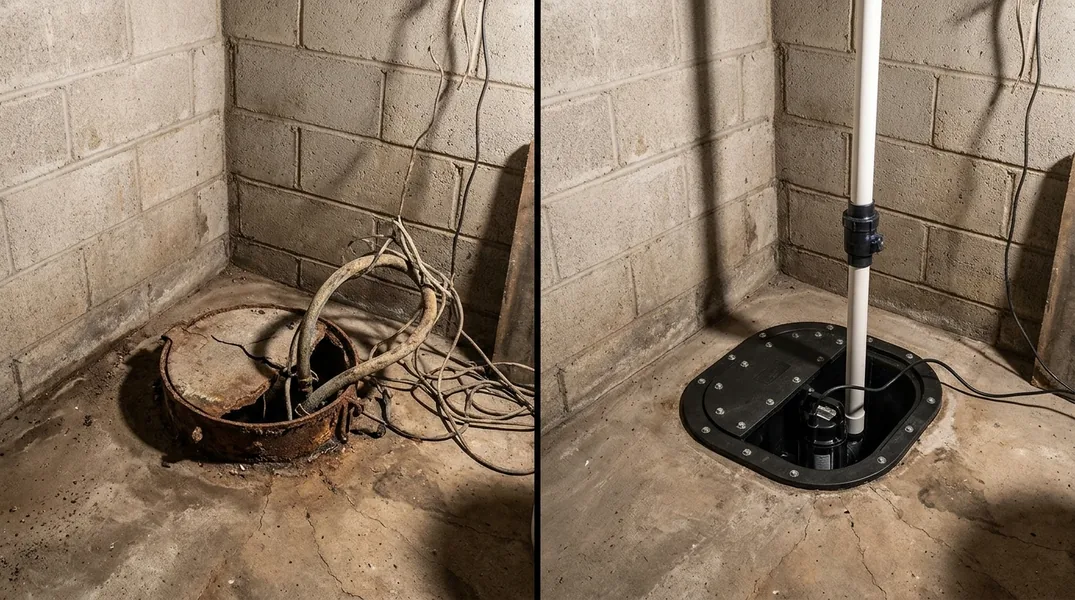
Why Snowmelt Season Is the Real Test for Your Sump Pump
In the Duluth area, spring arrives with a roar, not a whisper. The same lake-effect snow that blankets roofs and yards for months eventually melts, and all that water has to go somewhere. When the ground is still partially frozen and the soil is saturated, meltwater often finds the path of least resistance: toward your foundation. That is why sump pump maintenance in late winter and early spring is not a luxury, it is basic home protection.
Many homeowners think of storm basement flooding as a summer thunderstorm problem. In northern Minnesota, the bigger risk often comes from a slow, steady snowmelt combined with spring rain. Your sump pump may sit idle for weeks and then suddenly run for hours. Without a proper pre-season check, a stuck float, a clogged intake, or a dead backup battery can turn a manageable trickle into a flooded basement. If you live in Duluth or the surrounding communities, getting ahead of the melt is one of the smartest maintenance moves you can make.
Sump Pump Maintenance Checklist Before the Thaw
Start by inspecting the pump itself. Unplug it, remove the cover if your system allows, and look for debris in the pit. Clean out silt, gravel, or small toys that could jam the impeller. Check the float by lifting it manually to confirm the pump kicks on and off smoothly. If the float is stuck or the pump hums without moving water, address it before the first big melt. Test the discharge line by pouring a bucket of water into the pit and watching how quickly the water leaves. A slow drain can point to a clogged or frozen line, which is common in northern Minnesota when the outdoor pipe is still exposed to cold air.
Next, examine the Basement Waterproofing system as a whole. A sump pump works best when it is paired with a well-maintained Interior Drain Tile System that directs water to the pit. If your drain tile is clogged or the pit is full of sediment, the pump will cycle constantly or fail under load. Homeowners in Hermantown and Proctor should also check that the exterior discharge point is clear of snow and ice and that water is being directed well away from the foundation. If you are unsure whether your system is ready, a professional inspection can catch problems before they become expensive.
The Sump Pump Check Valve: A Small Part That Prevents Big Problems
The sump pump check valve is one of the most overlooked components in a basement waterproofing system. This one-way valve keeps water from flowing back into the pit after the pump shuts off. Without a working check valve, every cycle ends with water draining backward, which forces the pump to work harder and can shorten its lifespan. A failed check valve can also leave standing water in the discharge line, where it may freeze during a cold snap and block the line entirely when the snowmelt begins.
During your pre-season inspection, confirm the check valve is installed correctly and is free of debris. Listen for a loud thud or banging after the pump stops, which can indicate a loose or failing valve. If the valve is more than a few years old or you cannot remember the last time it was replaced, it is worth having it checked. A small investment in this part can prevent storm basement flooding and keep your pump running efficiently through the heaviest melt. For homeowners who want a thorough assessment, free estimate appointments are available to review the entire discharge setup.
Battery Backup Sump Pump: Your Safety Net During Spring Storms
Spring in northern Minnesota often brings the perfect storm: heavy snowmelt plus rain, and sometimes a power outage right when your sump pump is working its hardest. A battery backup sump pump is designed for exactly this scenario. It runs on a charged battery when the primary pump loses power or fails, giving you hours of protection while you wait for electricity to return or for a repair. Without a backup, a power outage during peak melt can lead to a flooded basement in a matter of hours.
Battery backup systems need maintenance too. Test the battery under load before the melt season, check the terminals for corrosion, and confirm the charger is working. Most batteries last three to five years, and a battery that has sat unused through a cold winter may not hold a charge. If your backup system is older or you are not sure it will perform, have it inspected. Pairing a reliable backup with Foundation Waterproofing and a properly graded yard gives you layered protection against snowmelt basement water. Residents in Cloquet and across the region know that spring weather can change fast, and a backup pump is cheap insurance.
When to Call a Pro for Sump Pump Service Near Me
Some maintenance tasks are simple DIY jobs, but others are worth handing to a professional. If your pump runs constantly, trips the breaker, makes grinding noises, or fails to move water during a test, it is time to call a pro. The same goes for a pit that fills faster than the pump can handle, a discharge line that keeps freezing, or signs of water intrusion along the basement floor or walls. These issues often point to a larger problem with your Exterior Basement Waterproofing or drainage system, not just the pump itself.
If you are searching for sump pump service near me in the Duluth area, look for a local company that understands northern Minnesota conditions. A technician can test the pump under real load, inspect the check valve, evaluate the backup battery, and confirm that your discharge line is protected from freezing. They can also recommend upgrades if your current system is undersized for the volume of snowmelt your property receives. Before the thaw begins, call Duluth Waterproofing at (218) 520-4386 to schedule a checkup. It is a small step that can save you thousands in water damage and stress.
Sump Pump Maintenance Cost in Duluth: What to Budget
Homeowners often ask what sump pump maintenance and related repairs cost in the Duluth area. A basic inspection and tune-up is typically affordable, especially compared with the cost of repairing a flooded basement. Replacing a check valve is a minor expense, while a new battery for a backup system falls in the mid-range. If your primary pump needs replacement or you decide to add a backup system, expect a larger investment, but one that pays for itself the first time a spring storm knocks out power. Exact pricing depends on your existing setup, the age of your equipment, and whether additional drainage work is needed.
The best way to budget is to get a clear assessment before the melt season. A local technician can tell you whether a simple tune-up will do or whether you need a new pump, a check valve replacement, or a backup battery upgrade. Waiting until water is already in the basement usually costs more, because emergency calls and water damage restoration add up quickly. Plan ahead, schedule service early, and you will head into spring with confidence instead of worry.
Looking for a professional basement waterproofing contractor in Duluth? Duluth Waterproofing responds fast for all your basement waterproofing needs.
Get a Free QuoteOur services: Basement Waterproofing · Interior Drain Tile System · Exterior Basement Waterproofing